Bangladesh
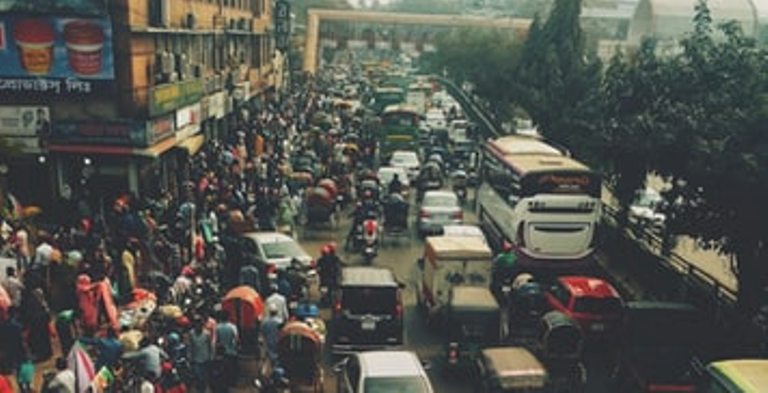
World Bank provides $500 million to help Bangladesh in improving road and digital connectivity
The Western Economic Corridor and Regional Enhancement (WeCARE) Phase I project is the first of a multi-phased $1.4 billion World Bank program to upgrade the existing 110 KM two-lane highway-Bhomra-Satkhira-Navaron and Jahore-Jhenaidah, to a safer and climate-resilient four-lane highway in western Bangladesh. It will support the government’s plan of developing a 260 km economic corridor in the western part and benefit over 20 million people.
The first phase of the program will upgrade 48km of the N7 the highway between Jashore and Jhenaidah and improve about 600km connecting rural roads and 32 rural markets/growth centres to
stimulate the local economy. To improve road safety, the highway will have additional lanes for slow-moving vehicles and a mediansafety barrier to separate oncoming traffic.
“The western region of Bangladesh is endowed with many agricultural and natural products and holds great potential of becoming a gateway for regional and international trade,” said Mercy Tembon, World Bank Country Director for Bangladesh and Bhutan. “This project will unlock the region’s
potential by stimulating the economy of districts, linking farms to markets, connecting Dhaka with the western region as well as with neighbouring countries, thus enhancing trade, transit and logistics
along the corridor.”
To help the country realize the ‘Digital Bangladesh’ vision, the project will install fibre optic cables along the highway to provide reliable and affordable internet access, which will be critical for emergency responses and business continuities in crises similar to the COVID-19 pandemic.
“The COVID 19 pandemic has hit the poorest hard with the loss of jobs and income. To help them recover from the shock, the project will support immediate social protection and livelihoods to the
vulnerable rural people by engaging them in labour-intensive civil works. Even in the post COVID period, the project will create jobs for the local communities through civil works for the national
highway and connecting rural roads and markets,” said Rajesh Rohatgi, World Bank Senior Transport Specialist and Project Task Team Leader. “It will also support the country’s two key transport
agencies—Roads and Highway Division and Local Government Engineering Department—to enhance emergency preparedness for any future pandemic or crisis.”
The project will also enhance agriculture supply chain efficiency in the western region by ensuring that products are transported to markets in less time and lower cost. For example, in Khulna Division, where about 57 per cent of the population’s income is generated from agricultural production, the project will improve storage facilities along the corridor that will help farmers reduce waste, increase sales and earn more.
The credit from the World Bank’s International Development Association (IDA), which provides concessional financing, has the 34-year term, including a four-year grace period. With this financing, the World Bank’s total commitment in the current financial year (FY 19-20) stands at $2.27 billion.
Bangladesh currently has the largest IDA ongoing program totalling over $13.5 billion. The World Bank is among the first development partners to support Bangladesh following its independence and
since then has committed more than $31 billion in grants, interest-free and concessional credits to the country, since its independence.